
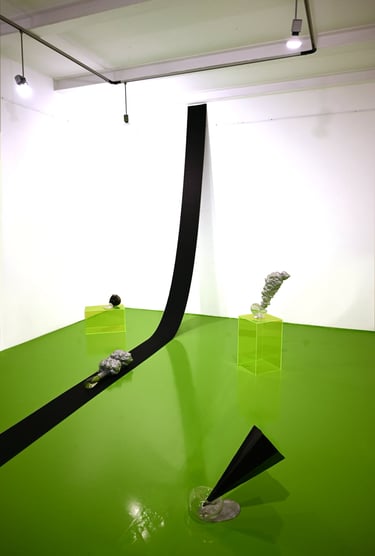
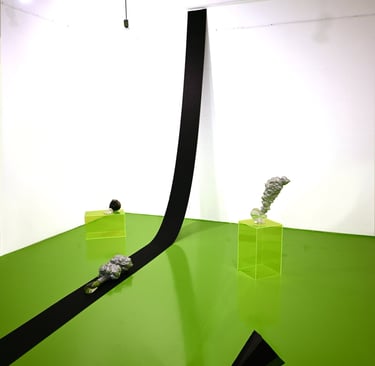
Aesthetics of Violence investigates the paradox between beauty and brutality, exploring how violence is often disguised beneath the polished surfaces of contemporary culture. Through glass and ceramic works that resemble toys, ornaments and utilitarian objects, Through a fusion of traditional craftsmanship and contemporary techniques, small artworks primarily in glass subtly placed in a colourful setting reference the sanitized narrative often employed in Western discourses. The exhibition aims not only to showcase the artworks but also to spark a dialogue about how aesthetic forms can both mask and critique societal indifference toward violence.
By deliberately juxtaposing the seemingly innocent aesthetics of toys and decorative objects with the cold, detached stance often observed in Western portrayals of war, and especially those waged in the East, the work offers a deliberate critique. Western narratives tend to sanitize and decontextualize the harsh realities of conflict by rendering them into distant, almost decorative issues. As Byung-Chul Han (2015) observes, “The violence of positivity does not deprive, it saturates; it does not exclude, it exhausts. That is why it proves inaccessible to unmediated perception.” Violence has taken on new dimensions in the 21st century, particularly in the context of war and digital technology. The hyper-mediation of global conflicts, the detachment enabled by technological advancements, and the commodification of war imagery all play a role in shaping contemporary perceptions of violence.
A curated environment unfolds before the viewer, resembling both a playground and a hazard zone, a place where scenes of destruction are made to be admired. These pieces, with their delicate forms and refined finishes, mirror the superficial treatment of violence in political rhetoric and media coverage, where complex human tragedies are often reduced to mere aesthetic elements. The familiar, playful appearance of these objects contrasts sharply with the severe, impersonal treatment of conflict, highlighting an irony: that the very tools of art—tools of beauty and expression—are used to question a culture that prefers to view suffering from a safe, detached distance. “One of the basic paradoxes underlying the aesthetics of violence is that fictional representations make the experience of violence into a form of play…” (Appelbaum, 2014)
Ultimately, this aesthetic choice is not just about visual appeal; it is a call to reconsider how beauty and art can both mask and critique societal indifference. This visual language is intentional; by presenting violence in an aesthetically pleasing or familiar form, the viewer is invited to confront the unsettling duality of attraction and discomfort. The utilitarian aspect of the pieces serves as a commentary on how violence is often domesticated and aestheticized in contemporary culture. Through injury of form, the works act as carriers of hidden messages, revealing how appearances can become complicit in the erasure of harm. The exhibition invites viewers to confront what is simultaneously alluring and unsettling, the point where playfulness meets destruction. As Susan Sontag once wrote, “To aestheticize reality is to make it unreal” (Regarding the Pain of Others, 2003). The decorative, almost collectible nature of the pieces is meant to challenge the uncomfortable reality that when violence is repackaged as art, its true human cost risks being overlooked or, worse, normalized. This exhibition is not merely a showcase of objects; it is an invitation to question our conditioned responses to violence.
AESTHETICS OF VIOLENCE
A Project by Daphne Klagkou
in Espaço Cultural das Mercês, Principe Real Lisbon
27/10-14/11
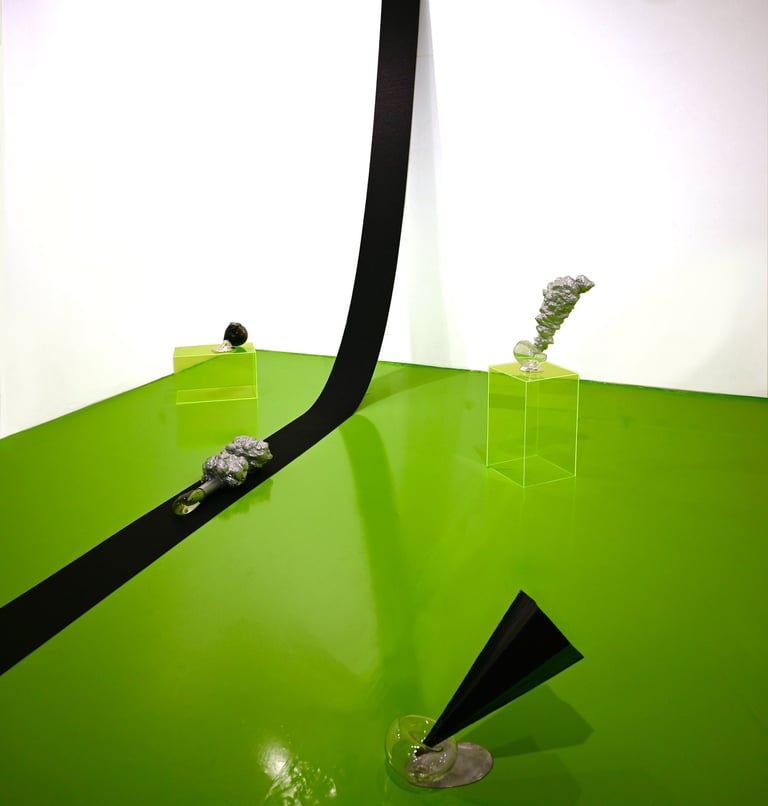
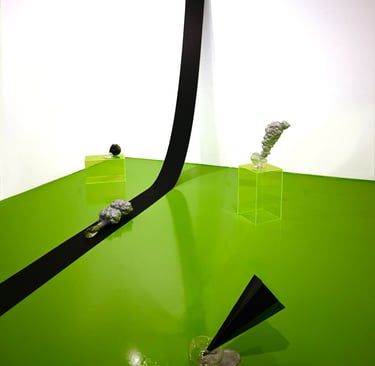
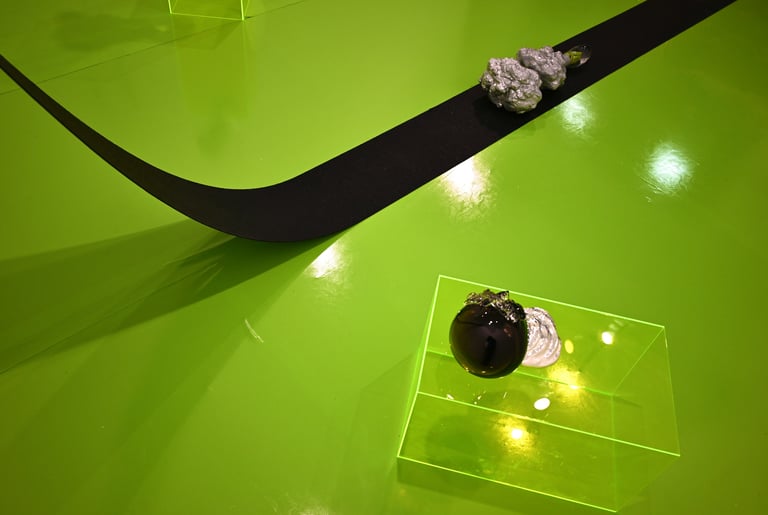
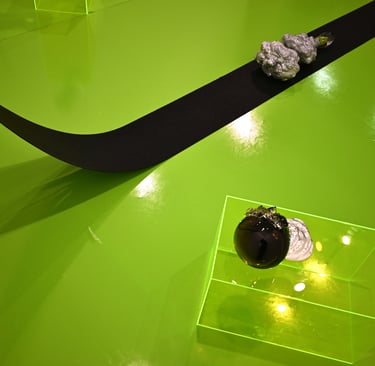
Details of the installation Aesthetics of Violence
dimensions variable
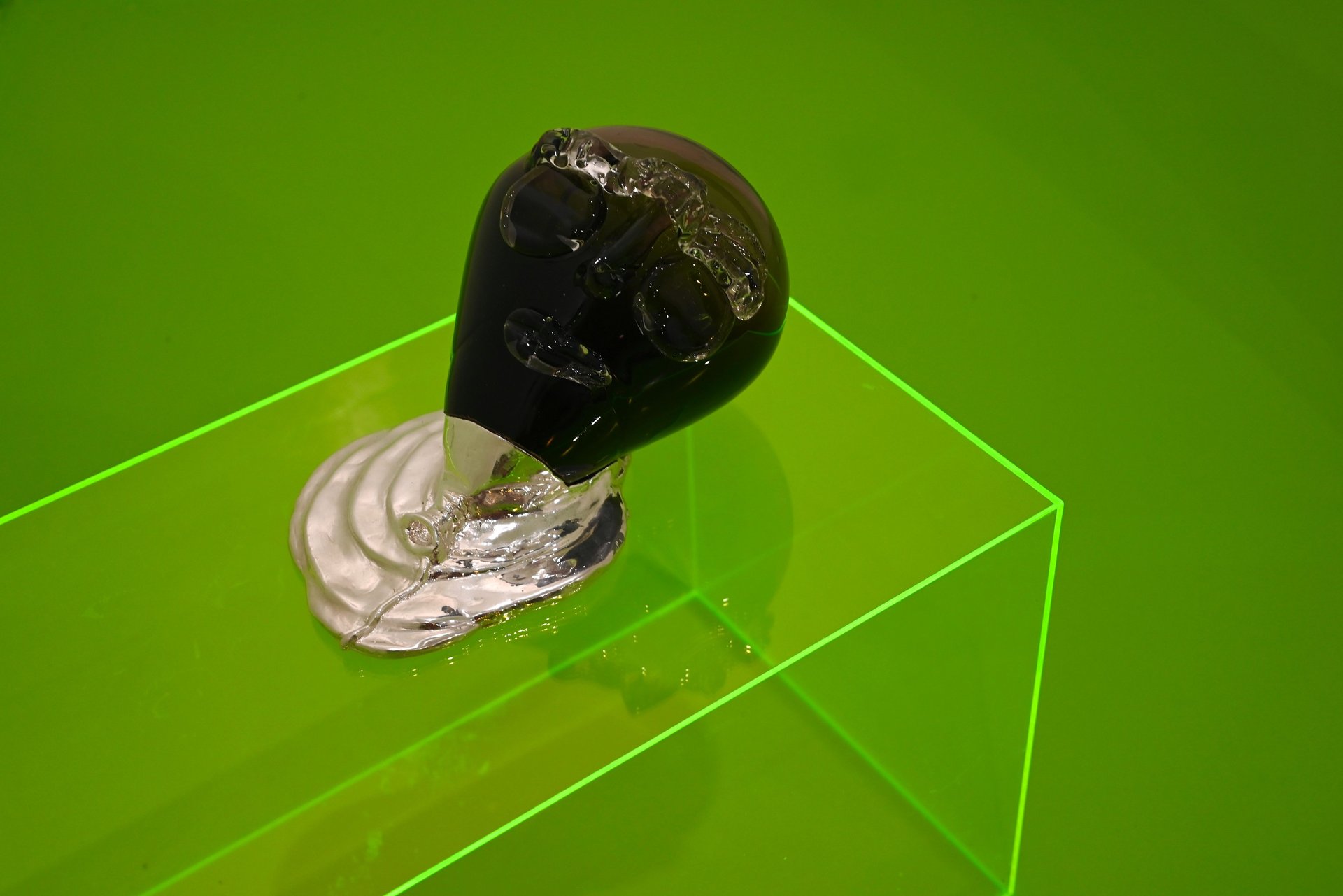
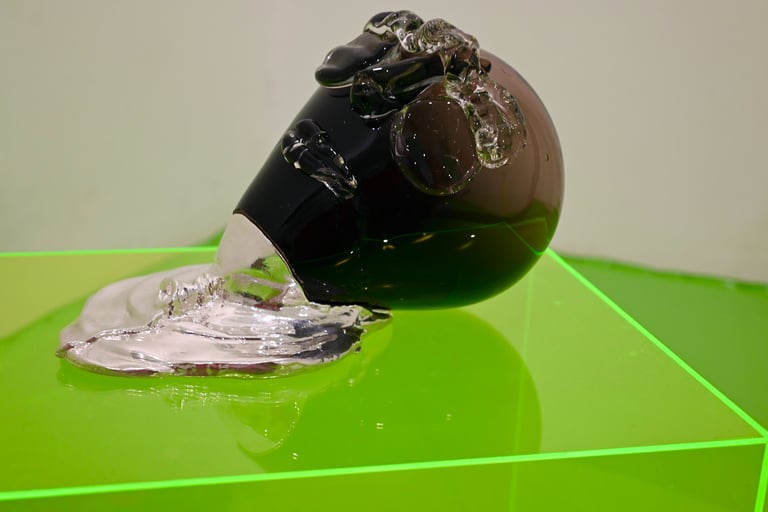
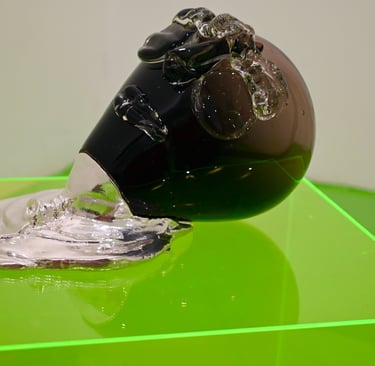
Act I
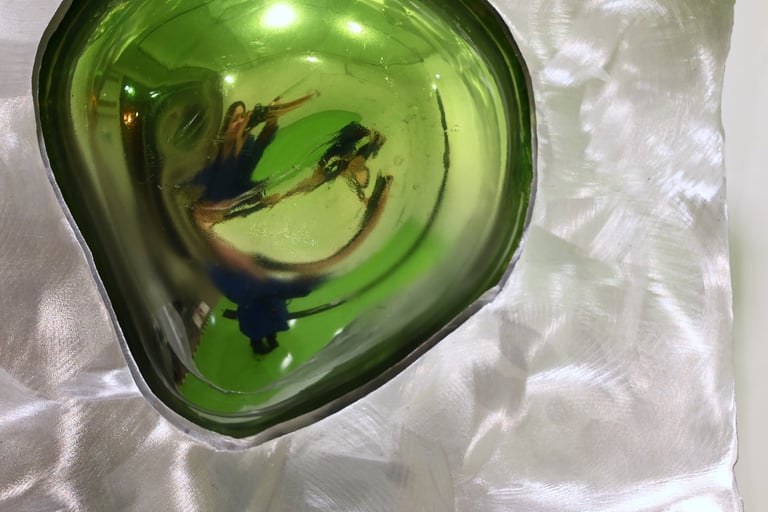
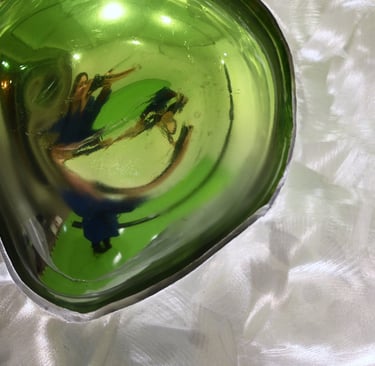
Blown glass head, silver plated element
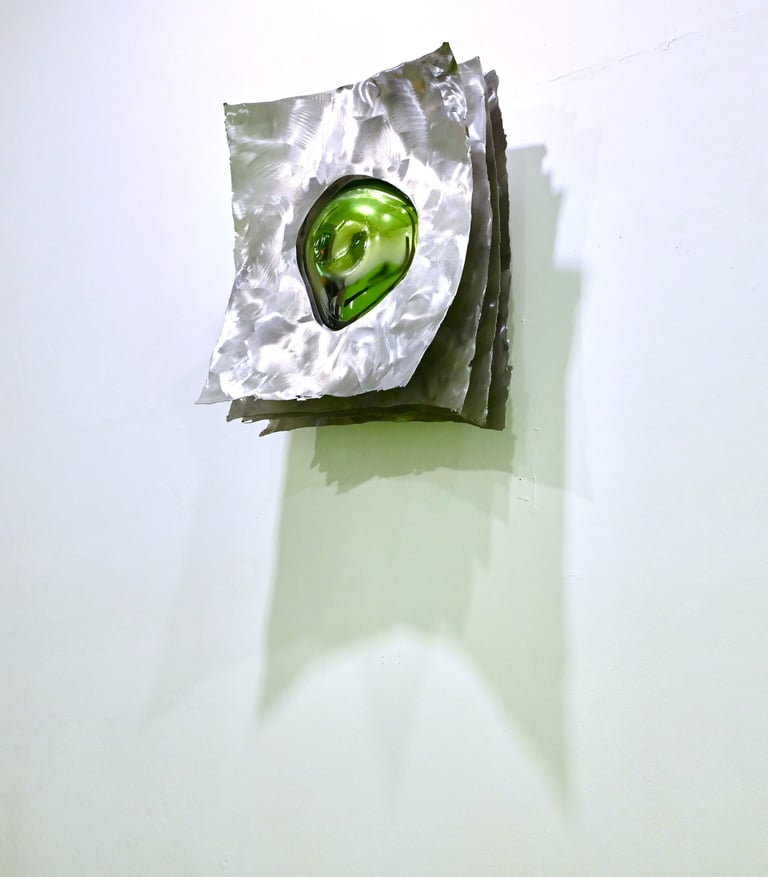
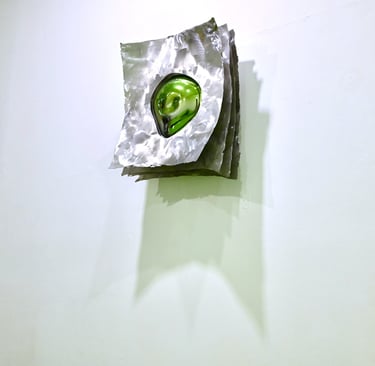
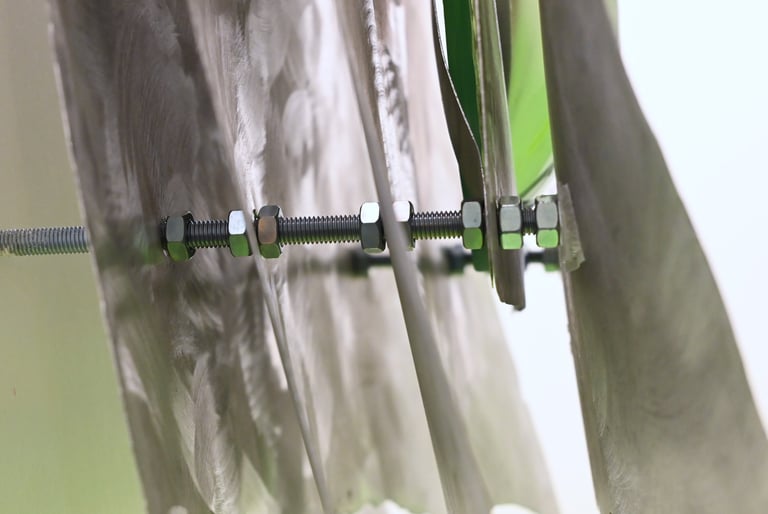
Act II
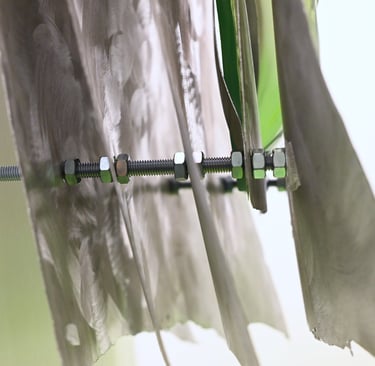
Mirrored glass, aluminum foils, metalic rods and bolts
Act III
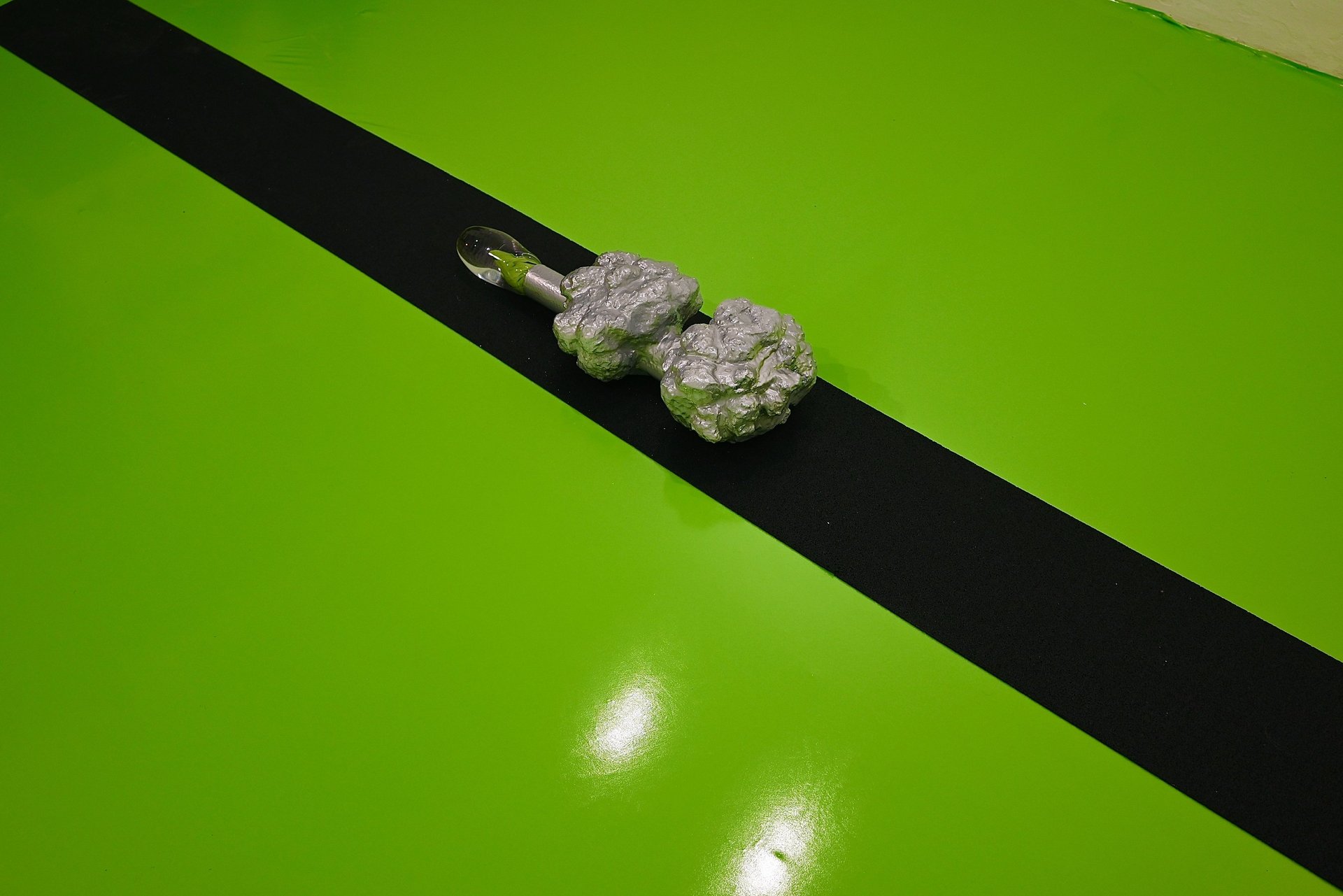
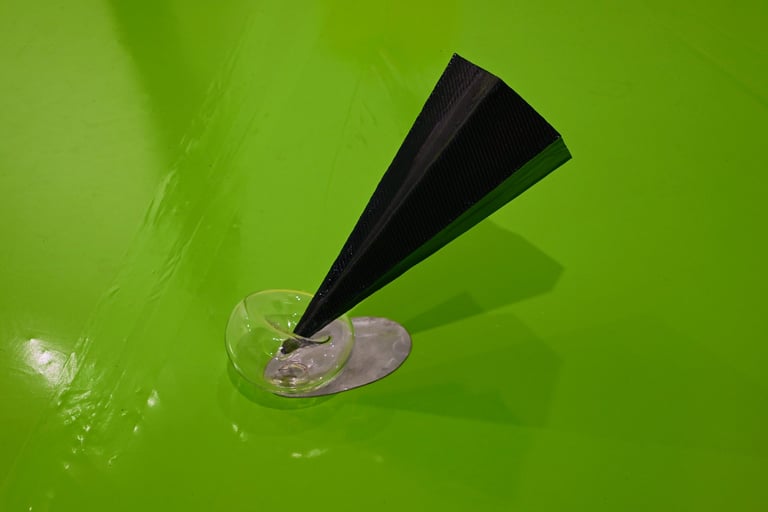
Blown glass, carbon fiber, metalic base
Act IV
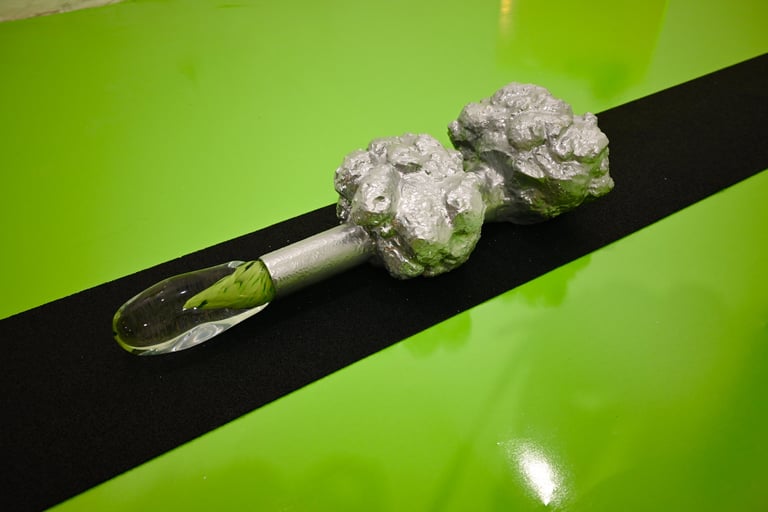
Blown glass, resin, polyurethane foam
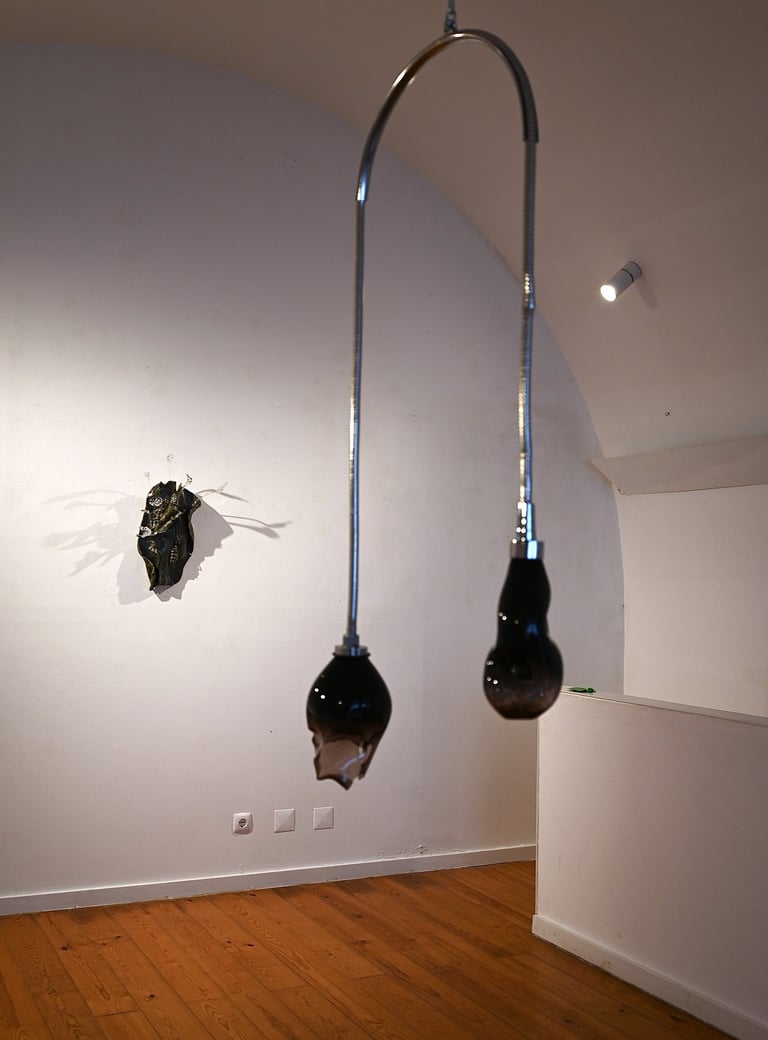
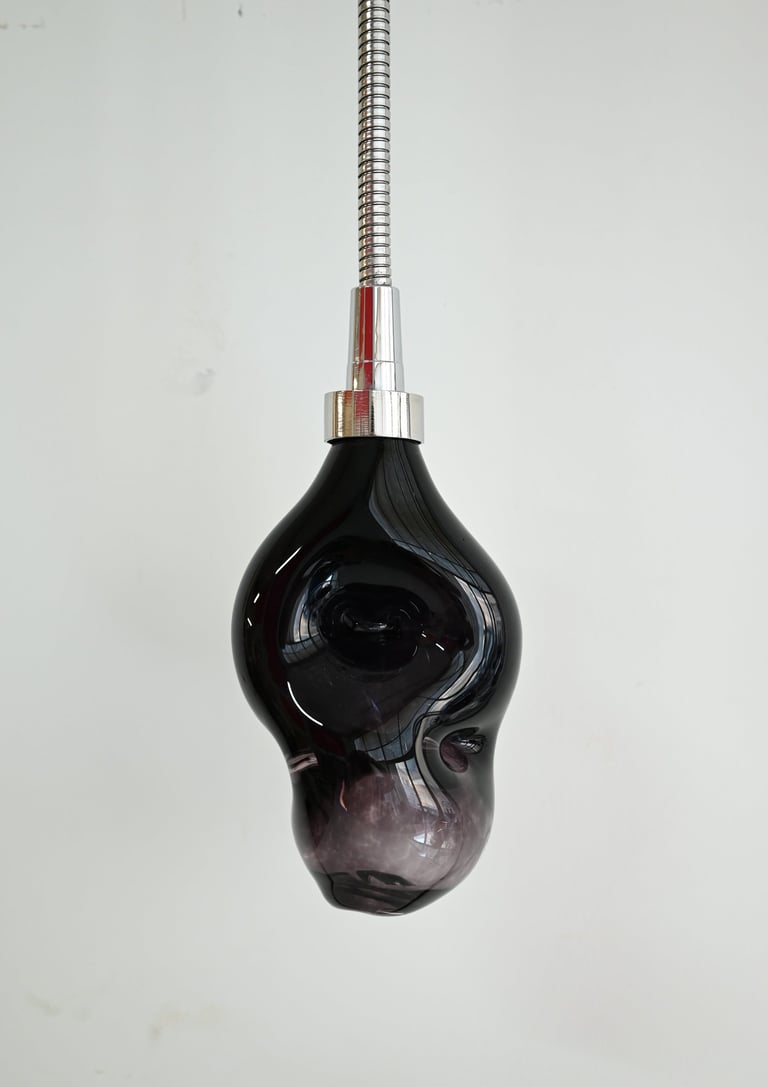
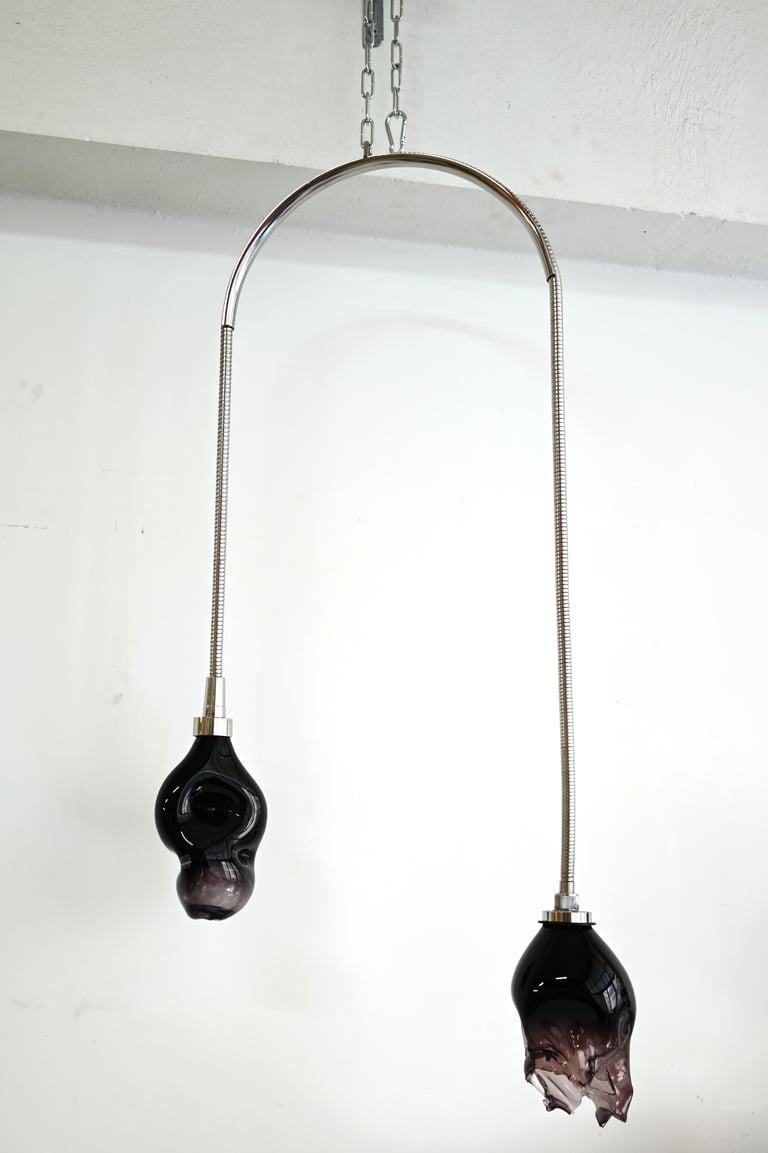
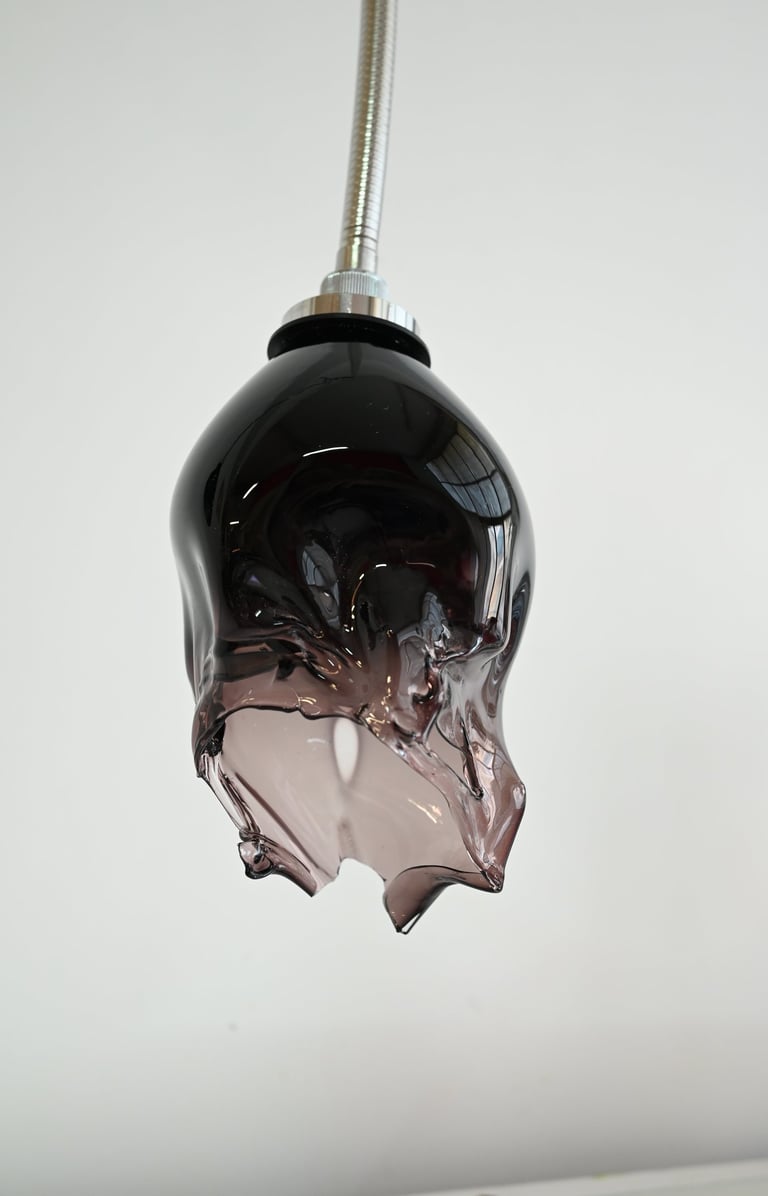
Communicating Vessels
Blown glass, metal, plastic shower cord
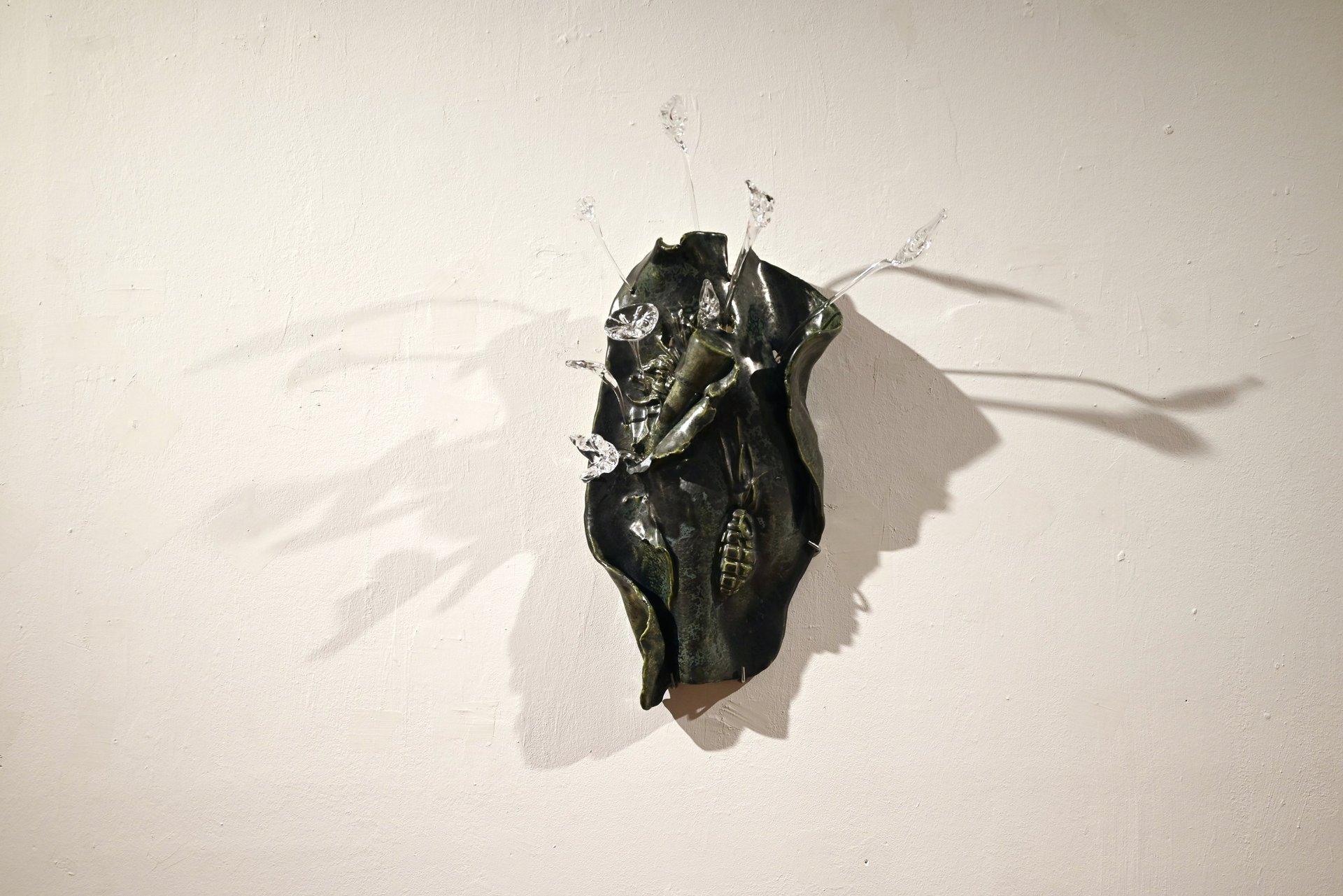
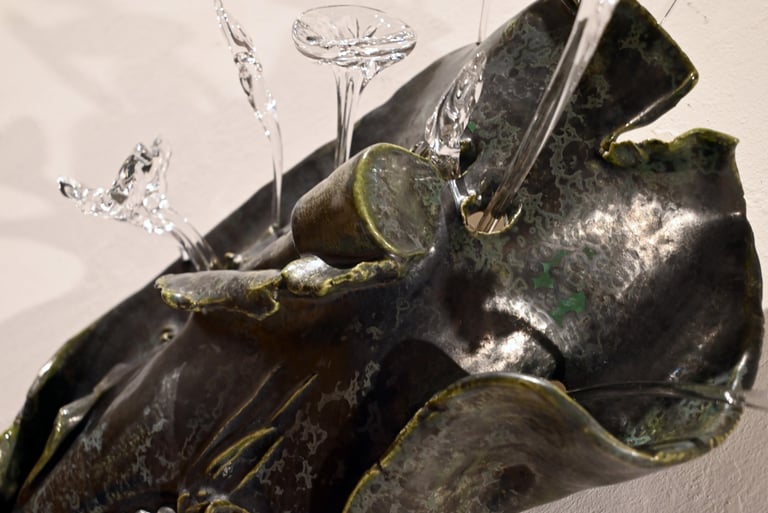
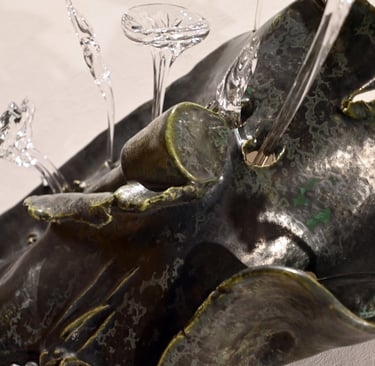
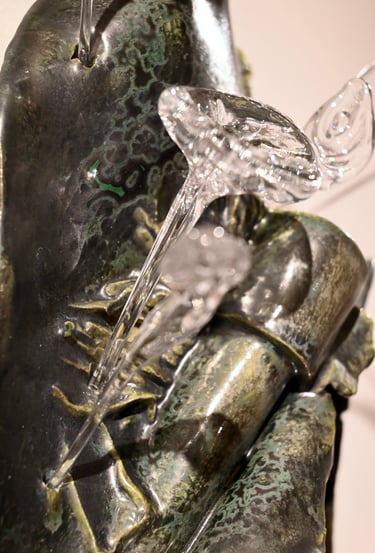
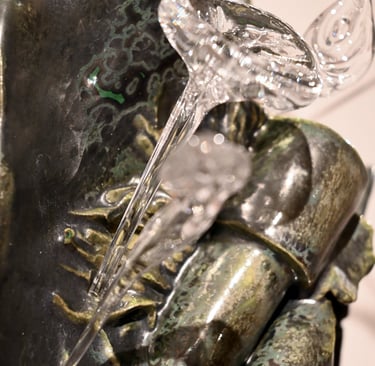
The Aftermath
glass flowers, glazed stoneware
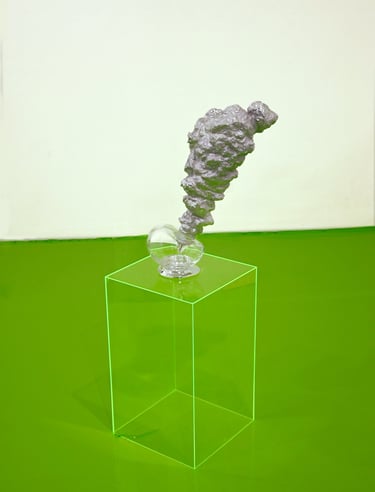
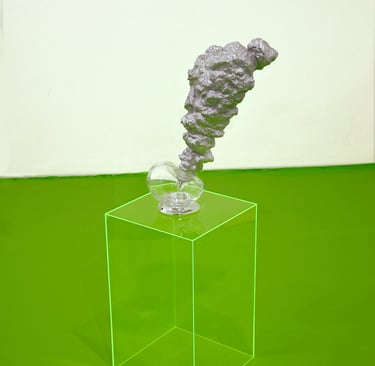
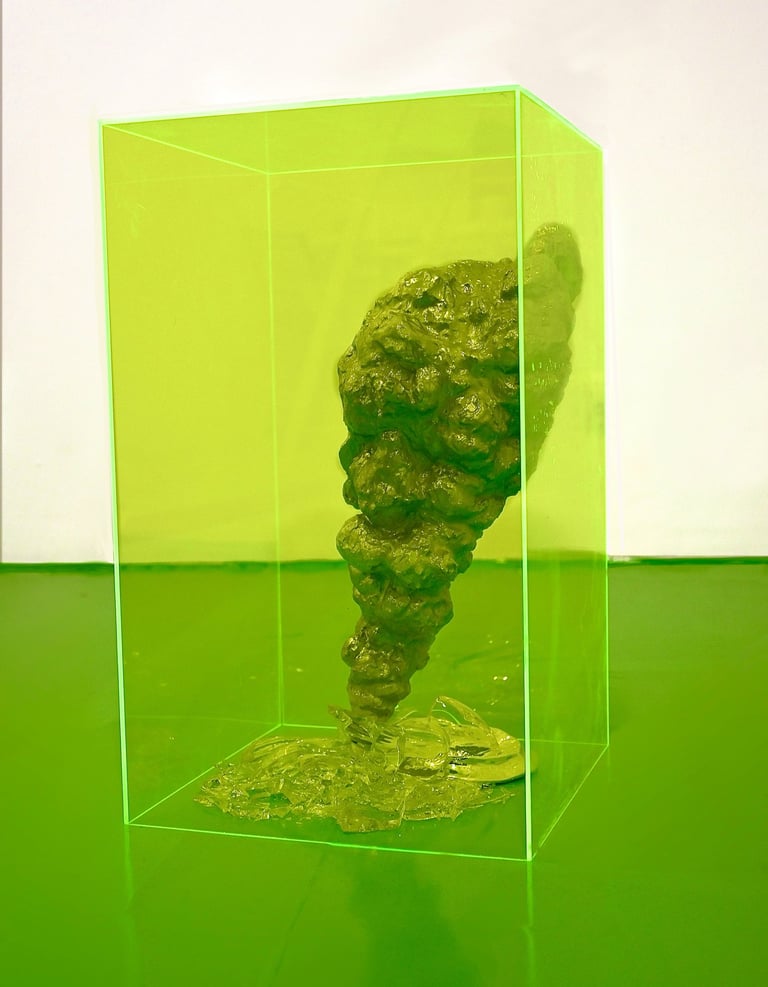
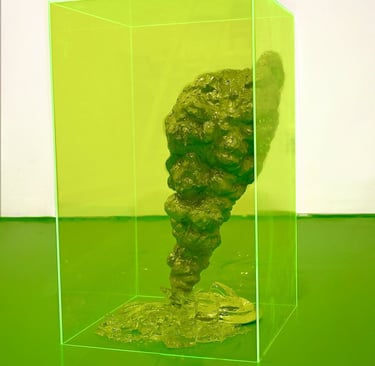
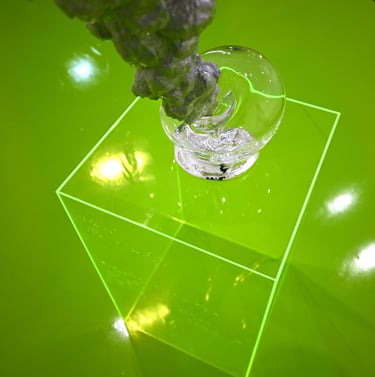
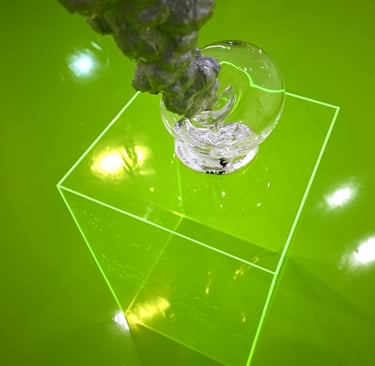
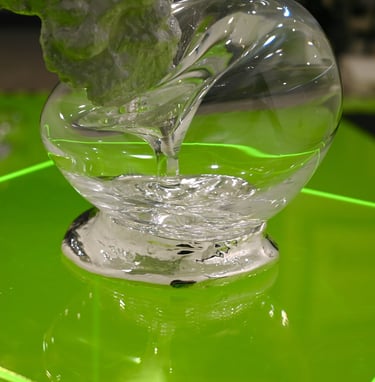
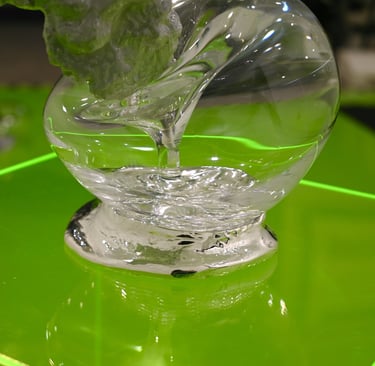
Final Act
Blown glass, resin, polyurethane foam
The same artwork exists in two different states.
At first, it stands on the pedestal—a harmed form, stilled and offered to be admired.
After the act, it is presented inside the pedestal, transformed into a contained event: broken glass left on the floor.